
Real work, real skills, rooted in real life.
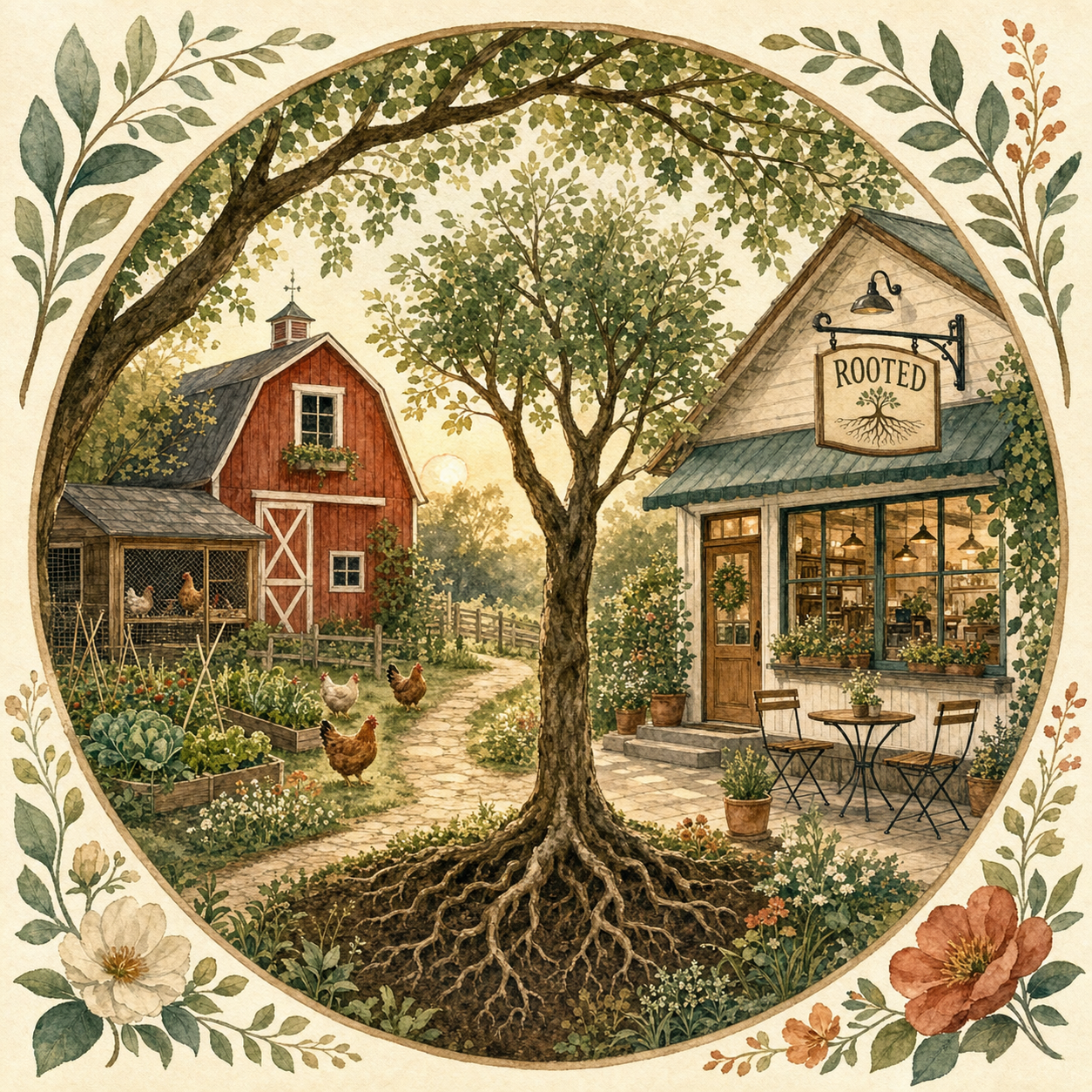
Coming soon — a vocational and job-training program for autistic adults, built around a working farm and a storefront café where participants train, practice, and ultimately earn a paycheck. ABA-informed teaching meets meaningful work. This is not clinical ABA treatment.
We’re building a vocational program for autistic adults. If you, your adult child, or a client you support might be interested, add your name to the list now and we’ll reach out the moment enrollment opens.
What this program is
An on-site vocational and job-training program for autistic adults. Participants learn real job skills in real work environments — a working farm and a storefront café/store — with ABA-informed teaching woven through every routine. The goal is honest, durable employment, not busywork.
Many participants will be hired directly into the storefront and farm as their skills come online. For those who want to move into outside employment, we’ll prepare them for it and support the transition.
What this program is not
This is not clinical ABA therapy. We do not diagnose, treat, or bill insurance for medically necessary behavior services. We use ABA principles — how learning happens, how skills are taught, how progress is measured — as an educational framework for job training and vocational growth. Participants are learners and trainees, not patients.
Who it’s for
Autistic adults (18+) who are ready to build job skills, want a structured environment to practice them in, and would benefit from a supported, predictable workplace. Co-occurring conditions are welcome. Participants must be able to safely participate in farm and storefront activities with the level of support we offer.
What participants learn
- Job-readiness skills. Showing up on time, communicating with a supervisor, taking breaks, asking for help, recovering from a mistake, handling a hard day.
- Farm work. Animal care, feeding routines, garden maintenance, harvesting, basic equipment use, seasonal cycles.
- Storefront & café work. Customer greeting, register basics, food prep, food safety, stocking, cleaning routines, working a shift from open to close.
- Adjacent life skills. Money basics, transportation planning, hygiene for the workplace, calendar use, self-advocacy at work.
- Self-management. Sensory regulation on the job, recognizing overload before it spills, requesting accommodations, building a personal toolkit.
How teaching works
- Task analysis. Every job is broken into small, teachable steps with clear success criteria.
- Practice in the real setting. Skills are taught in the barn, the garden, the kitchen, and behind the counter — where they’ll be used.
- Reinforcement that matters to the person. Paychecks, preferred tasks, choice, and recognition that actually feel good to the trainee.
- Data on real progress. We track skill acquisition over time so growth is visible and the plan can be adjusted.
- Affirming, never compliance-for-its-own-sake. We teach what makes a participant’s work life better — not what makes them easier to manage.
The farm-and-storefront model
The program lives in two connected spaces:
- The farm. A working farm where participants train in animal care, gardening, harvesting, and the steady, satisfying rhythm of outdoor work.
- The storefront / café. A community-facing shop and café where farm products are sold and prepared. Participants train as baristas, cashiers, food prep, stock, and front-of-house team members.
Both spaces are designed first as learning environments and second as real businesses. When a participant is ready to be paid, we hire them — with the supports they need to stay successful.
From training to paycheck
Most vocational programs end at the training step. Ours doesn’t. As participants demonstrate the job skills for a given role, they’re offered the chance to be employed in that role at the farm or storefront. For those who want to move into outside employment, we help with resume building, interview practice, employer education, and on-the-job coaching during the transition.
What we believe
- Work is dignifying. Real jobs, real expectations, real pay. Not pretend.
- Environment teaches. Skills generalize best when they’re built in the place they’ll be used.
- Support, don’t fix. Participants are not broken. We adjust the environment and the teaching to fit the person.
- Families are partners. Caregivers and support networks are kept in the loop and trained alongside the participant where it helps.
A note about scope
Toni Cavey holds an M.S. in Applied Behavior Analysis and is currently completing supervised fieldwork hours toward Board Certified Behavior Analyst (BCBA) certification. Even after BCBA certification, this program will not provide clinical ABA treatment. It is a vocational and life-skills program informed by ABA science, not a billable clinical service. Families seeking medically necessary ABA therapy will be referred to qualified providers.
Timing
We are in build mode. Site, partnerships, and program design are underway. If you want to be considered as one of our first participants — or to learn how to refer someone — send a note. We’re building the list now.
Be among the first to hear when enrollment opens. No commitment — just a name on the list so we can reach out when it’s time.